Secretive and Highly Useful Aspects of Vedic Astrology
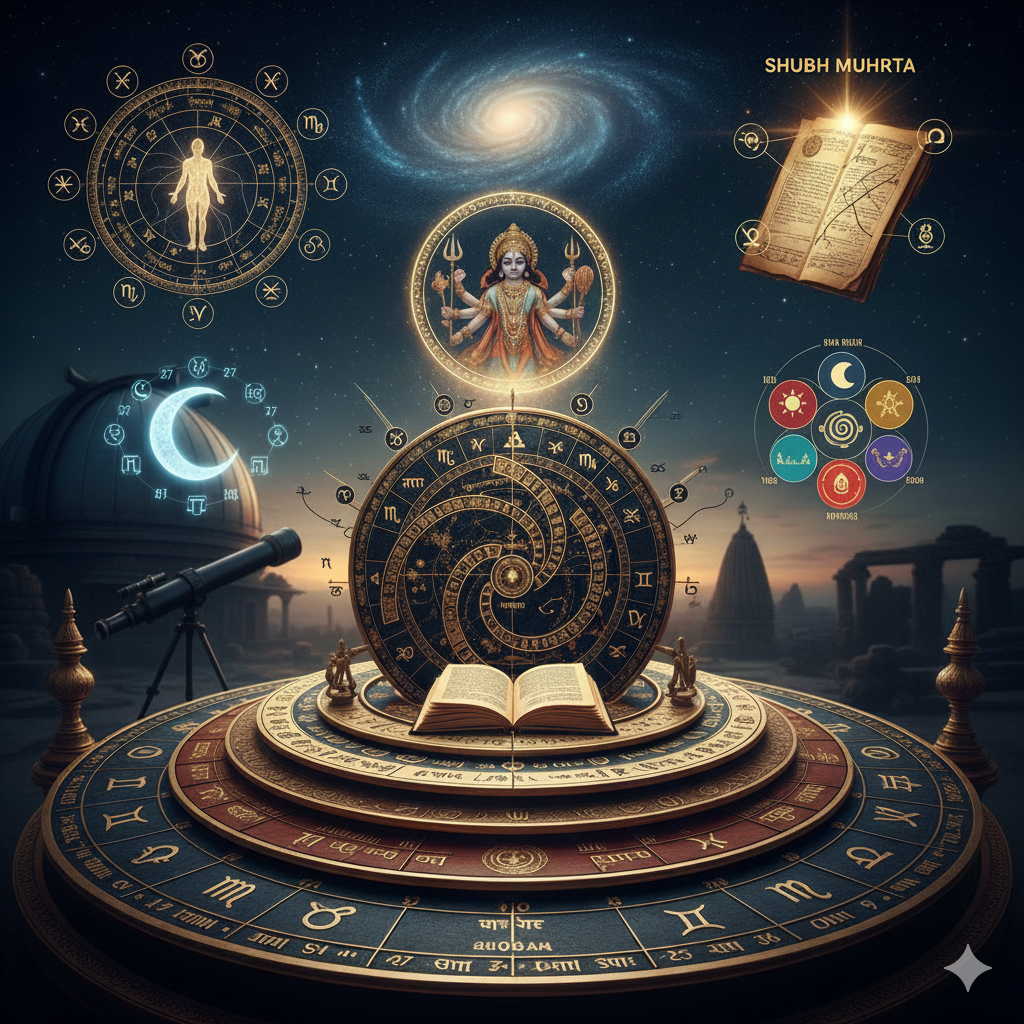
Vedic astrology, with its ancient roots, holds numerous secrets that are considered sacred and highly useful by those who deeply study it. These pieces of information are not widely shared but are known to those who have dedicated their lives to mastering the intricacies of Jyotisha. Here are some of the more secretive and highly useful aspects of Vedic astrology:
1. The Power of "D9" (Navamsa) Chart
The Navamsa chart, also known as the D9 chart, is considered one of the most crucial aspects of Vedic astrology. While the main birth chart (the Rasi chart) gives an overall view of a person's life, the Navamsa chart is seen as the "soul" of the chart, particularly when it comes to matters related to marriage, spirituality, and the deeper aspects of life purpose. It reveals the true strength of planets and is often used to assess the timing of significant life events, including spiritual growth and transformative moments.
2. The Secret of the "Shadbala" (Six-fold Strength)
In Vedic astrology, a planet's strength plays a significant role in determining its effectiveness in one's life. The Shadbala system measures a planet's strength across six different parameters: Sthana Bala (position), Dik Bala (direction), Kala Bala (time), Chesta Bala (movement), Drik Bala (aspect), and Rashi Bala (zodiac strength). This analysis allows astrologers to determine the exact potential of each planet in a birth chart, and it's one of the secrets used by advanced practitioners to provide highly accurate predictions.
3. Using the "Dasha" System for Life Prediction
The Dasha system, especially the Vimshottari Dasha, is considered one of the most powerful tools in Vedic astrology for life prediction. The Dasha system divides your life into planetary periods based on the positions of planets at the time of birth. This gives precise timelines for the impact of specific planets on your life. By examining the Dasha periods, an astrologer can predict when a person will experience significant growth, difficulties, or major turning points. The secret to truly mastering Dasha prediction lies in understanding the planetary sub-periods (Bhuktis) and how they interplay with the Navamsa chart.
4. The Concept of "Bhrigu Nadi"
The Bhrigu Nadi is an ancient system of astrology that focuses on the predictive power of the individual's unique planetary positions and the influences of past lives. It's said that great astrologers, such as Bhrigu Muni, wrote down the predictions of countless individuals over time. The Bhrigu Nadi is kept highly secretive and is considered a source of profound spiritual knowledge. Some astrologers use this method in combination with the Dasha system to pinpoint the exact moment of significant karmic resolution, often showing deeper, hidden purposes behind the person's current life journey.
5. Chandra (Moon) Nakshatra – The Karmic Indicator
While everyone knows the influence of the Sun sign, the Moon's placement in one of the 27 Nakshatras (lunar constellations) is often the most karmically significant aspect of the birth chart. The Nakshatra of the Moon indicates the deeper psychological tendencies, emotional nature, and even unresolved karma that a person is carrying from past lifetimes. This placement can reveal secrets about a person's life purpose and hidden talents, and understanding it provides access to the root causes of one's emotional responses and behavioral patterns.
6. The Secret of the "Karmic Planets": Rahu and Ketu
Rahu and Ketu, the lunar nodes, are often seen as the "karmic planets" in Vedic astrology. They represent the lessons that a person must learn in this life to resolve past karma. What is less commonly understood is that the position of Rahu and Ketu in your chart, especially in relation to the D9 chart, can reveal the hidden causes of your fears, obsessions, and deep-seated desires. By understanding where these nodes are placed, an astrologer can help you navigate your soul's journey, guiding you toward spiritual liberation and personal transformation.
7. The Role of "Rudra" in Vedic Astrology
Rudra is an esoteric aspect of Vedic astrology that revolves around the planetary deities or the higher cosmic forces governing each planet. These deities are said to bestow both blessings and challenges, depending on their alignment with the individual's karma. Understanding the Rudra aspect of planets, especially through specific mantras and rituals, can be used to both invoke positive planetary energy and negate the malefic effects of planets. Advanced practitioners may engage in specific rituals to align themselves with the cosmic deities for transformative purposes.
8. The Use of "Arudha Lagna"
Arudha Lagna, the "reflection" or the "image" of the self, is another lesser-known but powerful technique in Vedic astrology. It shows how a person is perceived by the world around them. This point is calculated based on the 10th house from the Moon or Ascendant, which gives insight into a person's public life, reputation, and career. Understanding the Arudha Lagna is particularly useful for career decisions and public life, as it reveals how the external world interacts with your true self.
9. The Use of "Tithi" in Timing
In Vedic astrology, the Tithi, or lunar day, is used to assess the auspiciousness of any given time for starting important ventures, including marriages, business deals, or other significant life changes. Each Tithi has its own energy and corresponding planetary associations, and it's often said that aligning actions with the correct Tithi can greatly enhance the chances of success. This is a secret tool that advanced astrologers use to perfect the timing of events in their clients' lives.
10. Muhurta and Timing for Success
Muhurta is an extremely important branch of Vedic astrology that deals with choosing the most auspicious time to begin any new activity. It's believed that starting anything at the right time, when the planets are aligned favorably, can significantly improve the success and outcome of that activity. This involves complex calculations regarding the position of planets, stars, and even the moon phases. The use of Muhurta is often kept secret by Vedic astrologers who only share it with individuals ready to embark on critical life changes, such as a business launch or a wedding.
11. "Kundali Doshas" and Their Remedies
While many people are familiar with the basic doshas in a birth chart, like Mangal Dosha (Mars dosha), there are subtle and lesser-known doshas that are also extremely important for a person's life path. These doshas are linked to deep-seated issues in relationships, health, and finance. Secret remedies and rituals exist to mitigate these doshas, and advanced astrologers may use these to help individuals unlock their true potential or even transform their destiny.
12. The Role of "Panchanga" for Predicting Events
Panchanga, the five elements of Vedic astrology, is a key system used for understanding the timing of any event based on specific astrological principles. The five elements include the day of the week, the Tithi (lunar day), the Nakshatra (lunar constellation), the yoga (the specific planetary combination), and the Karana (sub-day period). Each of these factors provides a highly detailed and secretive way of determining the right time to begin something important. This system has been used for thousands of years, and its true mastery can provide an astrologer with extraordinary insights into the most effective timings for major events.
These secrets and methods, when understood and applied by advanced practitioners, can lead to profound insights into a person's destiny, spiritual path, and karmic lessons. The vastness of Vedic astrology's wisdom is such that it offers an ongoing process of self-discovery and transformation.